
The Case for Personal Apps
When everyone can build software, small problems become worth solving.
 Matthias Lübken•Article
AI changes not just how software is developed, but what software gets built in the first place. Many everyday problems were too small, too specific, or too temporary to justify traditional software development. Personal apps introduce a new category: software that individuals can build for their own particular needs.
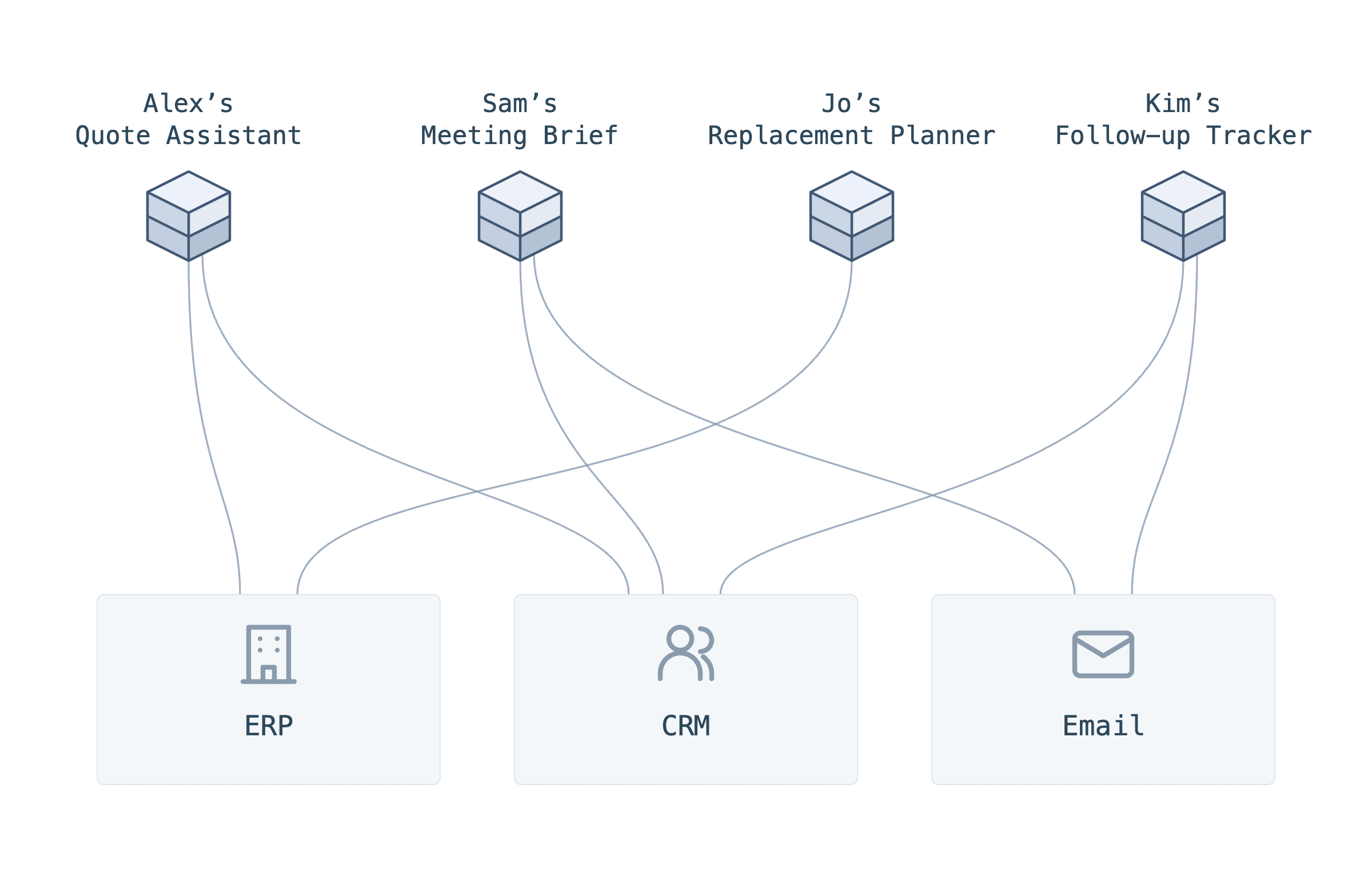
Let’s look at a typical company with a central ERP, CRM and lets say email. And let’s look at the process of generating quotes. While we have standard procedures we should start acknowledging that not every quote is the same. What if individual sales representatives could build their own Quote Assistants tailored to how they work?
Every Problem Deserves Its Own App
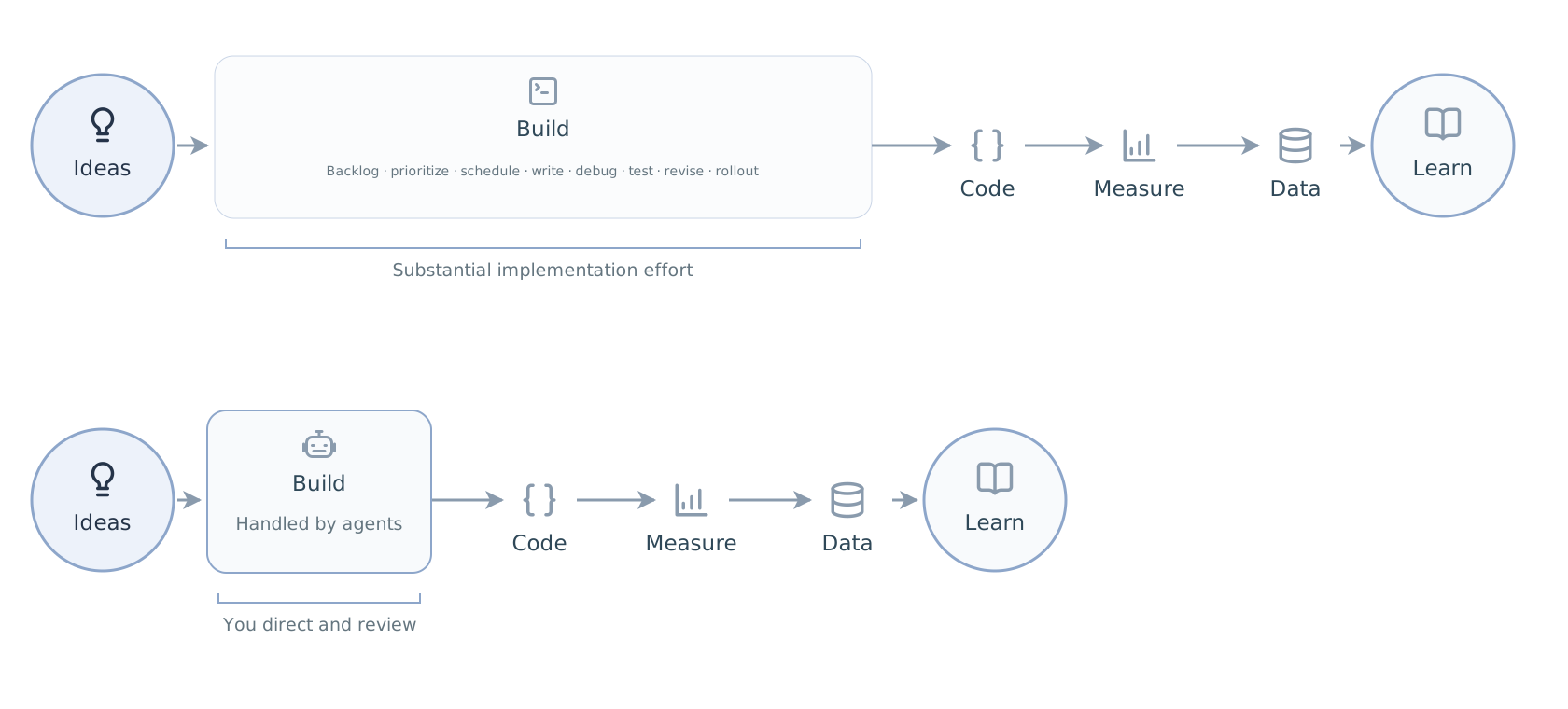
Computers have always been about solving problems and making people's lives easier. But the ability to create software has largely remained in the hands of software engineers. Most people rely on applications built by someone else. They must adapt their work to the capabilities and workflows those applications provide. When something doesn't fit their needs, they can request a feature, find a workaround, or simply accept the limitation.
Coding agents fundamentally change this relationship. Instead of requesting a feature with the owner of that software, you can have a coding agent build it for you. This approach, often called vibe coding, makes software development accessible to people without traditional programming skills.
Platforms like Lovable and Replit demonstrate the growing popularity of this approach. Much of the attention, however, has focused on building full-fledged applications: websites, SaaS products, and software intended for larger audiences.
But there's another opportunity: applications shaped around one person’s work, rather than a larger audience’s needs.
The economics are fundamentally different. A useful application no longer needs hundreds of users or a substantial business case. Sometimes, one user is enough.
Quote Assistant: One sales representative is the only person on the team whose customers still use a discontinued product line. They build a lookup table alongside the CRM that maps old product codes to current equivalents, links to archived sources, and calculates quantities and costs using fixed conversion rules.
Build Where the Work Happens
When you are at work using the standard tools, you feel the frustration: the repetitive manual steps, the cases where "the standard" doesn't fit your current challenges. More often than not, you ask yourself why the software in front of you can't do things the way you wish it would. At least that's what I've often thought as a product manager and software developer.
But turning that frustration into software usually means explaining your needs to someone else, like an IT department or an external development team. Your ideas become requirements, enter backlogs, and compete with other priorities—and often lose. Each handoff adds delay and room for misunderstanding.
Personal apps shorten that path. The people doing the work can build the tools they need, right where the problems occur.

The benefit isn't just faster delivery. Building software becomes a way of discovering what the solution should be. People rarely know exactly what they need at the outset. Using an early version in real work reveals missing steps, unexpected exceptions, and assumptions that don't hold up. They can adapt the tool as they learn, rather than trying to define every requirement in advance.
This doesn't mean every application should be built by its users. Complex and critical systems still need dedicated engineering. But not every improvement needs to begin as a traditional software project.
Quote Assistant: Using the lookup table, the representative finds that customers often request legacy parts by nicknames rather than product codes. They add a column for each customer’s names for those parts, so the next request is easier to work through. The tool takes shape as they use it on real quotes.
Software Is Disposable
When software is expensive to build, only certain tasks justify the investment. Lower costs make it worth building software for more tasks—even small or one-off ones. You might build an app to analyze a particular dataset, prepare a meeting, or organize an event. Once the task is done, you can discard it.
Sometimes an app only needs to do one thing, once.
This includes experimentation. You can build a tool to try an idea or explore a different approach without knowing upfront whether it will be worth keeping. The experiment itself can justify the effort.
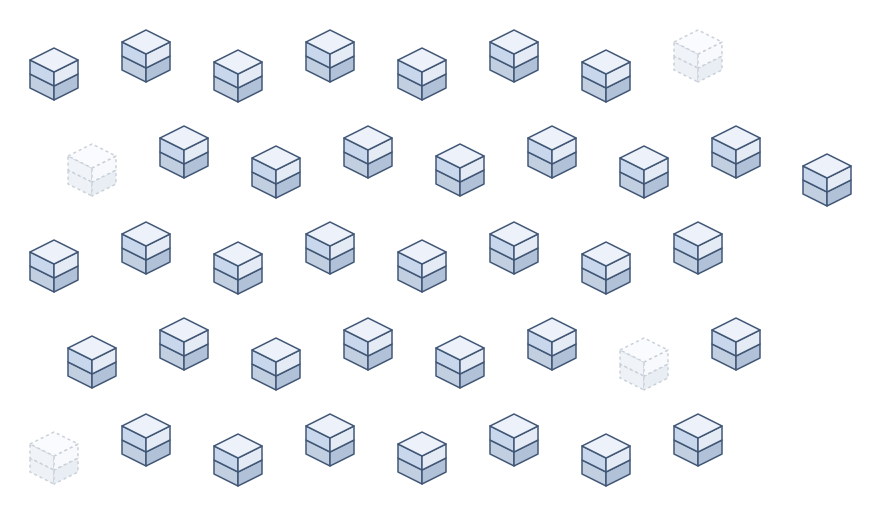
Quote Assistant: One customer decides to replace all their remaining legacy equipment. The representative builds a one-off worksheet to group the replacements by factory site and compare a phased rollout with replacing everything at once. Once the quote is settled, the tool has served its purpose.
Keep it as long as it helps. If it proves useful in your everyday work, improve it. If colleagues could benefit, share it. If it has served its purpose, let it go. Disposable still means using appropriate safeguards for the data and systems involved—not cutting corners on safety.
Build, Measure, Learn
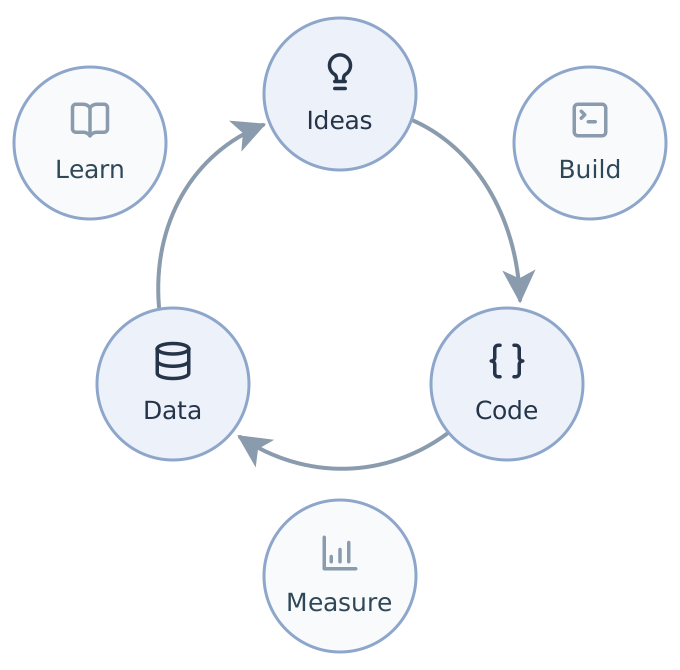
The Lean Startup movement popularized Build, Measure, Learn. With coding agents, you can apply that loop to your work: build a small tool, use it, see whether it helps, and adapt. Continuous improvement becomes something everyone can participate in.
What matters is the impact on the work: time saved, errors reduced, or better outcomes—not the number of apps built or AI calls made. For your own tools, the benefit is obvious. If an hour-long task now takes five minutes, you don't need a dashboard to tell you it's useful. But when organizations have visibility into these applications, they can discover improvements they never planned. People responsible for improving processes can reach out to the builders, and together they can spread the idea.
Quote Assistant: Sales operations notices that the representative spends less time preparing legacy-product quotes. They look at the tool together and see how keeping reference material alongside the quote reduces searching. Sales operations helps other representatives experiment with similar lookup tables for their own specialist product lines.
A New Era of Personal Software
This shift is already happening. Internal platforms like Stripe's Harbor and Ibotta's Jiffy are making AI-assisted application development more accessible to employees. Software is becoming worth building not just for large groups of users, but for one person, one task, or one experiment.
Personal apps don't replace central ERP, CRM, or other shared systems. They let people build around them without turning every improvement into a feature request. But important questions remain. When should a solution become an app rather than an AI agent? How do we operate and secure potentially thousands of personal apps? And how do we manage their access to shared systems and data? These questions deserve discussions of their own.
The fundamental shift isn't simply that everyone can generate code. It's that everyone can participate directly in improving how work gets done. Instead of only using the software you're given, you can create the software you need.
Thinking about personal apps in your organisation?
We work hands-on with teams to build software in fundamentally new ways: introducing coding agents, making AI-built applications dependable, and setting up platforms where people build and run their own apps, with the guardrails your organisation needs.