
Singapore’s Mix of Ambition and Pragmatism in AI
 Matthias Lübken•Article
Two weeks ago, I had the opportunity to present how we think about building agents at AI Engineer Singapore. It was my first time visiting Singapore, and I was curious to see how builders, companies, and institutions there approach AI.
I came away with a strong impression: Singapore combines ambition with pragmatism unusually well.
Arriving in Singapore
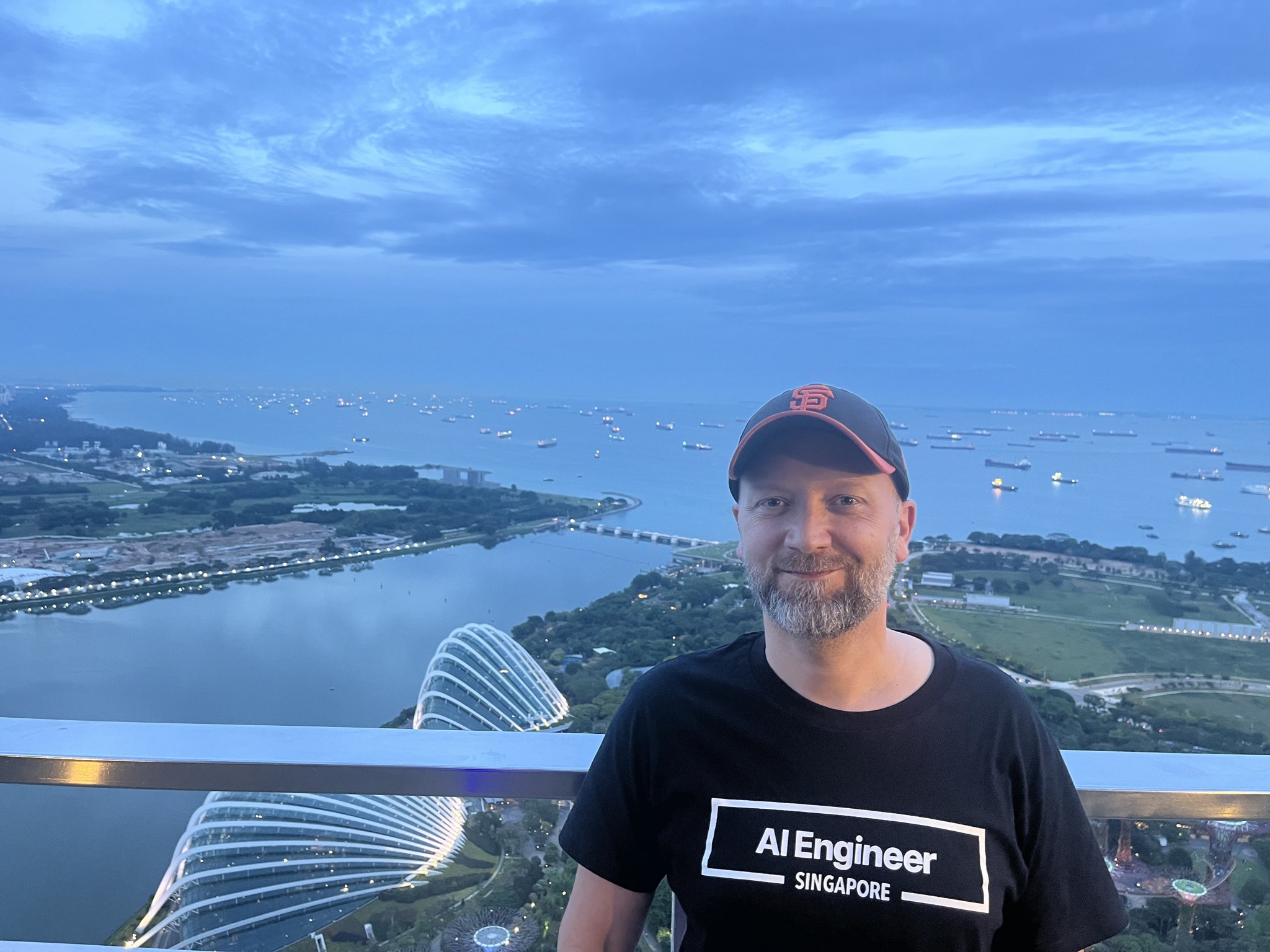
Singapore was very easy to get started in. Direct flight from Frankfurt, eSIM, Google Maps, and Apple Pay. That was basically all I needed. Public transport worked very well, and everything was in English.
The history of Singapore is fascinating, and you feel the mix of cultures everywhere. It is a multi-ethnic city with Southeast Asian and international influences, which made it easy for me to feel at ease. I felt safe everywhere and at any time of day. The only part I had to get used to was the humidity. :-)
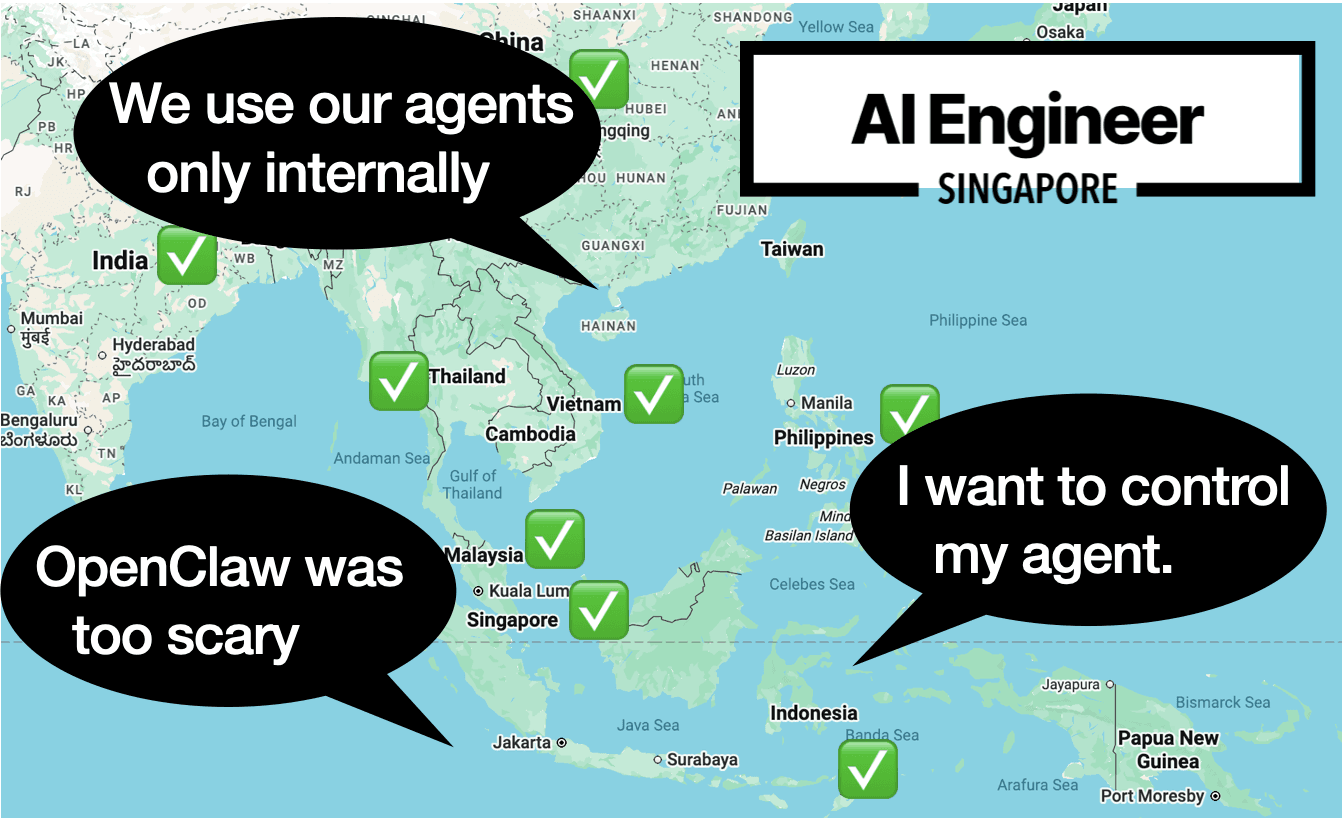
Singapore really felt like a hub for the Asia-Pacific region. At the conference, I met people from Singapore, China, India, Malaysia, Vietnam, Thailand, the Philippines, Indonesia, and Australia. Super inspiring.
The city itself already felt pragmatic, ambitious, and well-organized. And that energy carried into the conference.
AI Engineer Singapore: an ambitious builder conference
AI Engineer Singapore 2026 was organized by the fine folks at 65 Labs. After the first workshop day, it was mostly a single-track conference hosted in a hotel.
It was very well managed, with 10-minute talks across different aspects of AI engineering. Compressing ideas into 10 minutes is challenging for both speakers and the audience. But people went home with lots of new ideas to explore.
People were excited about agents, but the conversations were not just about demos. They were about implementation, reliability, and productization.
When the Foreign Affairs Minister built his own agent
One of the big moments around the conference was when Singapore’s Foreign Affairs Minister Vivian Balakrishnan shared his personal AI system publicly.
He described it as a “second brain” for diplomatic work, built with NanoClaw and Andrej Karpathy’s LLM Wiki pattern. The interesting part was not only that he “uses AI.” He published the architecture and discussed it with builders.
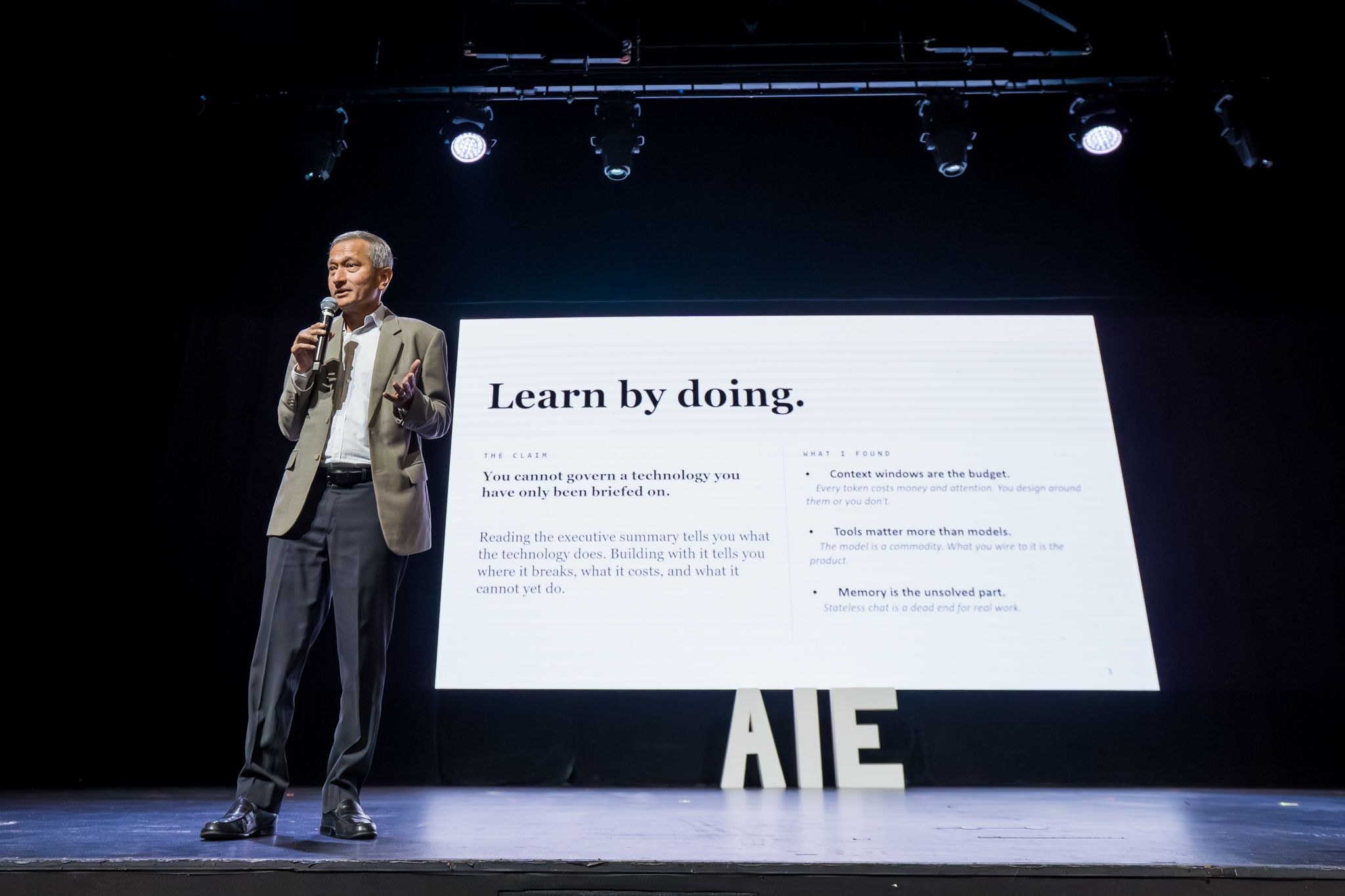
I think this sends a strong signal to both political and business leaders: go try these systems. Responsibly, of course. There is a lot to discuss around security, stability, and governance, but the building blocks are here.
Trying these systems today helps you understand and define the future.
Minister Vivian Balakrishnan’s presentation reemphasized my impression of Singapore: ambitious and practical.
The harness behind the magic
My talk, “A Piece of PI – Embedding The OpenClaw Coding Agent In Your Product,” was about understanding and using the core of these personal agents: the coding-agent harness.
Systems like OpenClaw can feel magical because they discover capabilities, explore new data sources, stitch components together, and dynamically build new solutions. But once you understand the mechanics, the magic is not really magic anymore. It comes from the harness. That was the point of my talk.
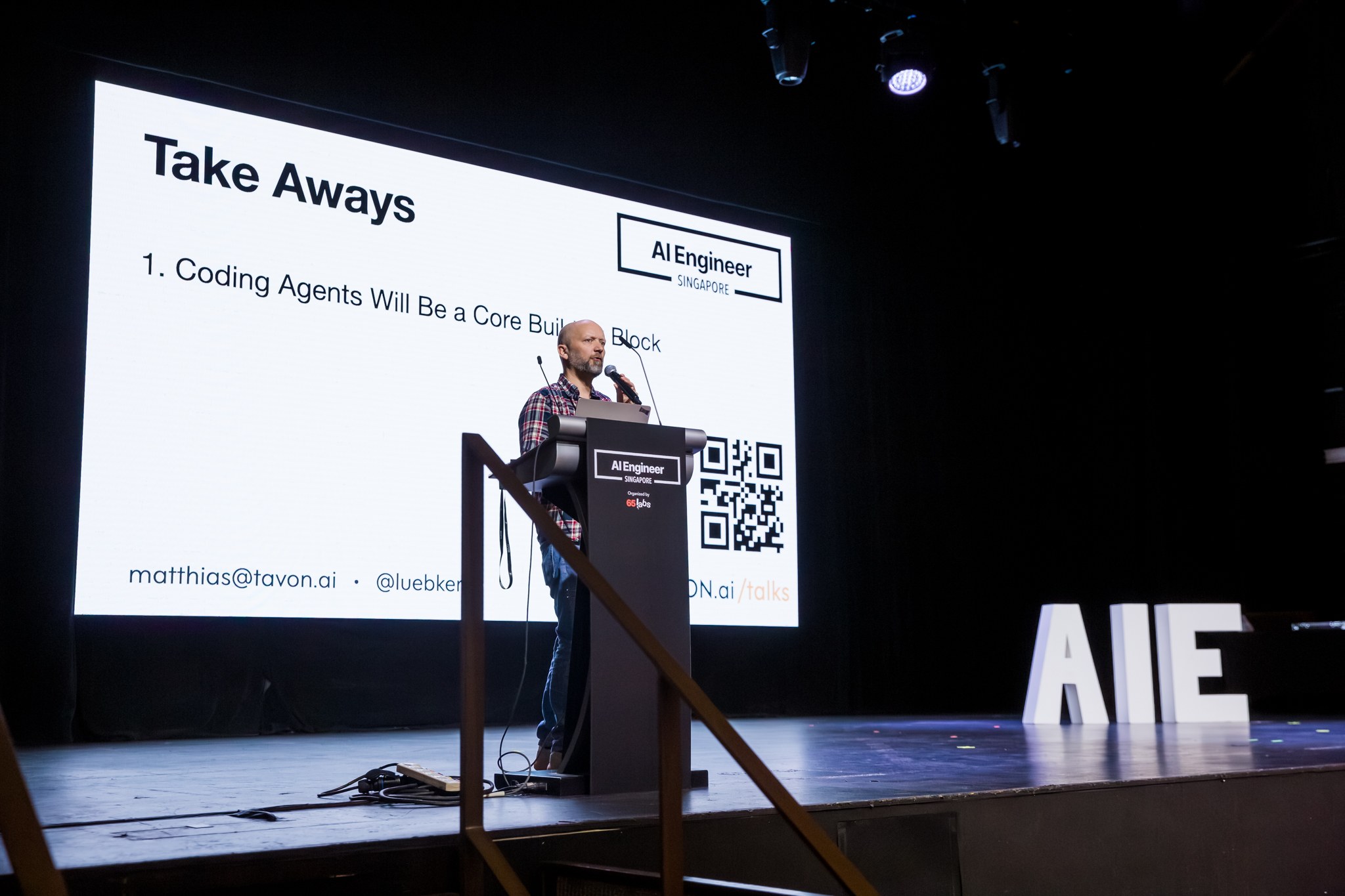
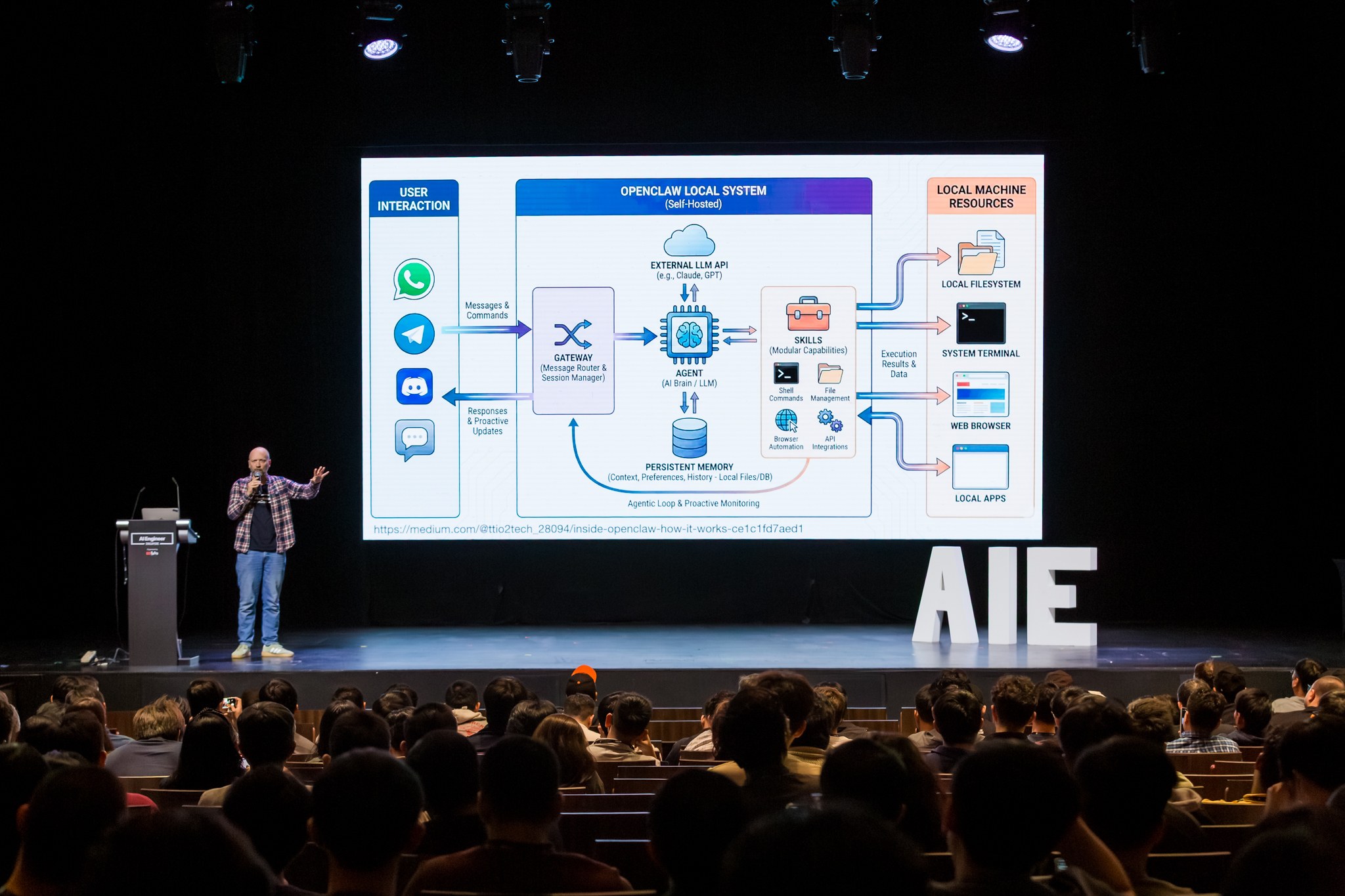
pi.dev is a good starting point because it is deliberately simple: a small number of powerful primitives, radical extensibility, and easy to embed into products. Coding agents are not just developer tools. They help us understand the primitives of agentic systems.
With that said, I want to reemphasize that we are just getting started with agents. Projects like Hermes, NanoClaw, OpenClaw, and similar harnesses are still in their infancy. So as a user, be patient with the changes. As a technology leader, focus on understanding the principles.
You can also download my slides from the talk.
Enterprise reality
For individuals, it is relatively easy to explore this new reality with AI. For organizations, the reality is different, especially with agents, because they are moving from passive assistants to more proactive systems.
That raises very practical questions:
- How does this influence my job and my team’s work?
- How does this change team structures and collaboration?
- What do I need to learn now?
- Which technologies should we invest in?
- Where should agents act autonomously, and where do we require human review?
- Can we understand, audit, and reproduce what the agent did?
- How do we make this secure?
There is a lot to discuss, explore, and learn.
But we need to get going. As Kumar Puspesh put it, we need to start to “unlearn” old assumptions. This is not just about learning new tools. It is about learning new ways of working.
Governance: a practical approach
One of the topics that came up in my conversations was governance. Singapore and Europe, Germany in particular, face similar questions: how do we enable AI adoption without letting systems run uncontrolled?
Singapore does have the advantage of being a small state, and it seems to use that advantage well. It can move quickly and produce governance guidance that is lightweight, practical, usable by builders, and not so heavy that it blocks experimentation.
I want to particularly point out Singapore’s IMDA Model Governance Framework for Agentic AI. It gives a practical reference point for thinking about agentic systems.
First off, it is a living document. The version I read was 1.5, published on 20 May, and it already reflects many of the latest developments around agentic AI. The framework is a very practical starting point for implementers and business leaders who want to get started while still building on a solid foundation.
Ambition plus pragmatism
AI Engineer Singapore reinforced for me that builders, enterprises, and governments in Asia and Europe are facing many of the same challenges. The motivations and local contexts may differ, but the practical questions are surprisingly similar. We have real use cases, but we also still have a lot to learn.
How do we build agents that are reliable? How do we make them inspectable? How do we embed them into real products? How do we govern them?
For me, the starting point is coding-agent harnesses. Understand the primitives, build products around them through clear extension mechanisms, and keep traces and governance in mind from the beginning.
Thanks to everyone for the great conversations and all the new ideas I took away during these days. Let’s keep in touch.
This post is based on my LinkedIn article.